
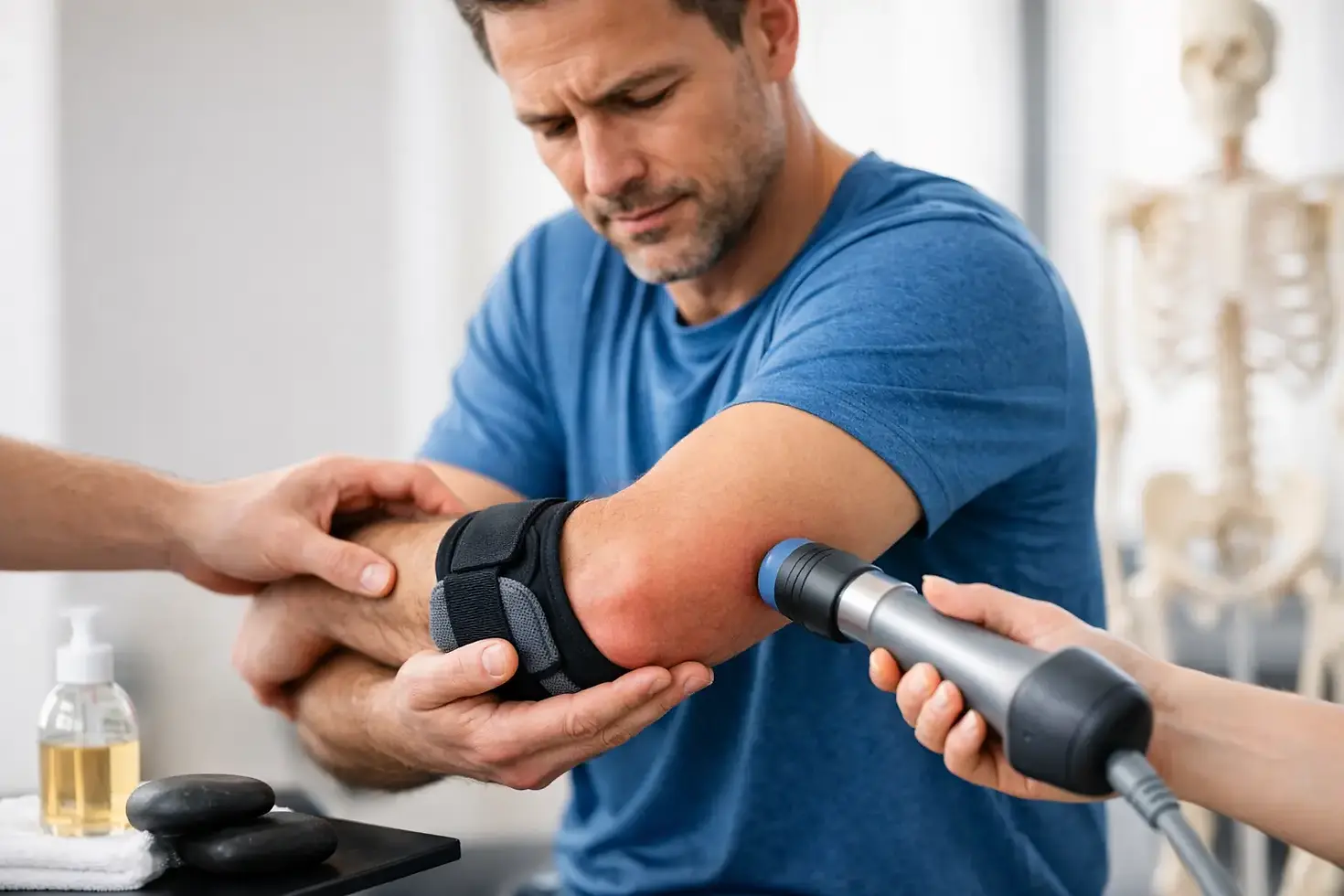
Best Treatments for Tennis Elbow That Last
That sharp ache on the outside of your elbow can make ordinary tasks surprisingly difficult. Pouring coffee, gripping a steering wheel, typing, lifting a pan, or swinging a pickleball paddle may all trigger it. The best treatments for tennis elbow do more than temporarily quiet pain. They reduce overload on the irritated tendon, restore strength where it is needed, and help you return to work, exercise, and daily life with confidence.
Tennis elbow is common among people who have never picked up a racquet. It often develops when the forearm muscles and their tendon attachment at the outside of the elbow are repeatedly asked to do more than they can currently tolerate. In the Charleston Lowcountry, that may mean a demanding work schedule, weekend yardwork, golf, tennis, pickleball, strength training, or repetitive computer use.
What Tennis Elbow Actually Involves
Tennis elbow, also called lateral epicondylalgia, affects the tendon that connects the wrist-extensor muscles of the forearm to the bony outside of the elbow. Pain is usually felt at that outer elbow point, but it can travel into the forearm. Gripping, lifting with the palm down, shaking hands, opening jars, or extending the wrist often makes it worse.
The condition is not always an acute tear or simple inflammation. In many persistent cases, the tendon has become sensitive and less able to handle its current load. That distinction matters because complete rest alone rarely builds lasting capacity. The goal is to modify aggravating activity temporarily, then progressively rebuild the strength and endurance the arm needs.
A proper evaluation is valuable because outside-elbow pain can also come from the neck, a nerve irritation, joint problems, or another forearm condition. Numbness, tingling, significant weakness, unexplained swelling, a visible deformity, or pain after a fall should be assessed promptly.
Best Treatments for Tennis Elbow: Start With Load Management
The first step is usually not giving up every activity. It is identifying the movements, positions, and volumes that repeatedly flare symptoms, then adjusting them enough to let the tendon settle while keeping the arm active.
For example, a tennis player may reduce back-to-back playing days, shorten sessions, and avoid drilling through sharp pain. Someone whose job requires lifting may use two hands, keep loads closer to the body, or change the grip position when possible. A desk worker may benefit from adjusting mouse position, keyboard height, and prolonged gripping habits.
Pain is useful feedback, but it should not be the only measure of progress. Mild discomfort during rehabilitation exercise can be acceptable when it remains manageable and settles back to baseline by the next day. Pain that steadily worsens during activity or lingers longer afterward is a sign that the dose needs adjustment.
Progressive Strengthening Is the Foundation
Targeted exercise is one of the most reliable ways to improve tendon tolerance over time. The right program does not simply hand you a generic set of wrist exercises. It considers your pain level, grip strength, work demands, sport, shoulder mechanics, and how your symptoms respond from one week to the next.
Early exercises may use isometric holds, where the muscle contracts without moving the wrist. These can help introduce load in a controlled way. As symptoms improve, treatment typically progresses to slow wrist-extension strengthening, grip training, and exercises that build forearm endurance.
The elbow does not work alone. Weakness or poor control at the shoulder blade, shoulder, or trunk can make the forearm work harder during lifting, racquet sports, and repetitive tasks. A complete rehabilitation plan often includes upper-body and movement training, not just a single wrist exercise with a light dumbbell.
Consistency matters more than intensity. Tendons adapt gradually, often over weeks to months. Pushing hard on a good day and stopping completely after a flare can create a frustrating cycle. A physical therapist can set clear loading targets and measure changes in pain, strength, grip tolerance, and function so progress is visible rather than guessed.
Hands-On Care Can Support, Not Replace, Exercise
Manual therapy may help reduce pain and improve movement, particularly when stiffness in the wrist, elbow, shoulder, or upper back contributes to the problem. Soft-tissue techniques and joint mobilization can be useful additions when they help you move and exercise more comfortably.
However, passive care alone is rarely the whole answer for persistent tennis elbow. Massage, heat, ice, and other symptom-relief strategies can make the arm feel better in the short term, but lasting improvement usually depends on a progressive plan that changes the tendon’s capacity and the activity demands placed on it.
Ice may be reasonable after a flare if it provides relief. Heat can feel helpful before movement for some people. Neither is required for healing, and neither should be used as permission to repeatedly overload the elbow.
Braces and Medication: Helpful in the Right Role
A counterforce strap worn around the upper forearm or a wrist brace may reduce discomfort during specific tasks by changing how force reaches the tendon. These options can be useful for work, golf, or a temporary return to a demanding activity. Fit matters, and a brace should not cause numbness, tingling, or increased pain.
Bracing is best used as a bridge while strength and tolerance are being rebuilt, not as a permanent solution. If pain returns every time the brace comes off, the underlying loading plan likely needs more attention.
Over-the-counter anti-inflammatory medication or topical pain relief may help some people manage a short-term flare, but medication is not appropriate for everyone. Medical history, kidney concerns, stomach issues, heart risk, and interactions with other medications all matter. Discuss medication choices with a physician or pharmacist, especially if symptoms are ongoing.
What About Injections, Shockwave Therapy, and Surgery?
These treatments may have a role in selected cases, but they deserve a thoughtful conversation rather than a quick fix. Corticosteroid injections can reduce pain in the short term for some patients, yet repeated injections may not support long-term tendon health and can be associated with symptom recurrence. They are not usually the first choice for a gradual, overuse-related problem.
Platelet-rich plasma and other biologic injections have mixed research results. Some patients report improvement, while outcomes vary based on the diagnosis, procedure, rehabilitation plan, and individual factors. Shockwave therapy also has variable evidence and may be considered when a well-designed exercise program has not produced enough improvement.
Surgery is uncommon and is generally reserved for persistent cases that have not responded to appropriate conservative care over an extended period. Before considering it, it is worth confirming the diagnosis and reviewing whether rehabilitation included sufficient progressive loading and a genuine return-to-activity plan.
Return to Work and Sport Without Repeating the Cycle
The final phase of treatment should look like the life you want to return to. If your goal is lifting a child, the program should include safe lifting progressions. If you play tennis or pickleball, it should build from controlled swings and shorter sessions to the speed, volume, and grip demands of actual play.
Technique and equipment can matter. A racquet grip that is too small, a sudden jump in playing frequency, poor lifting mechanics, or a work setup that keeps the wrist extended all day can keep the elbow irritated. These details are not always the sole cause, but correcting them can reduce unnecessary stress while strength improves.
At Private Therapy Services, one-on-one care with a Doctor of Physical Therapy allows treatment to stay focused on your specific triggers, goals, and measurable progress. The right plan should leave you knowing what to do between visits, how to judge your response, and when it is safe to advance.
You do not have to wait until gripping a coffee mug or finishing a workday becomes unbearable. Early, targeted care can help you restore confidence in your arm and get back to the activities that make your routine feel like your own.


Comments